How Much Does an LLC Cost in California? (All The Fees)

Forming an LLC in California costs $70, the state filing fee for the Articles of Organization paid to the Secretary of State.
After that, the big recurring cost is an $800 minimum franchise tax to the Franchise Tax Board. It's due every year, whether or not the LLC turns a profit.
This breakdown walks through every required and optional cost a California LLC can run into, from the state filing fee to the annual franchise tax.
Quick Summary
- Check your LLC's formation date against the franchise tax exemption window before assuming the first year is free.
- Some of the cheapest formation costs, like the EIN and a name reservation, are easy to skip and pay a filing service for instead.
- Calendar the Statement of Information renewal early, since the state's first warning arrives only a few months before it's due.
| Cost Item | Amount | Frequency | Required? |
|---|---|---|---|
| Articles of Organization (Form LLC-1) | $70 | One-time | Mandatory |
| Expedited filing (24-hour to 4-hour) | +$350 to +$1,000 on top of the $70 base fee | One-time | Optional |
| Name reservation | $10 | One-time (60 days) | Optional |
| Statement of Information (Form LLC-12) | $20 ($250 penalty if delinquent) | Every 2 years | Mandatory |
| Minimum franchise tax | $800 | Every year | Mandatory |
| LLC fee (income over $250,000) | $900 to $11,790, based on income | Every year (if applicable) | Conditional |
| Registered agent (required to have one) | $0 (self) or $80–$300 (paid service) | Every year | Mandatory |
| Operating agreement | $0 (template) or attorney cost varies | One-time | Recommended |
| DBA / Fictitious Business Name | Varies by county (e.g., $26 in Los Angeles County) | One-time (renews every 5 years) | Optional |
| Certificate of Status | $5 | As needed | Optional |
| EIN from the IRS | $0 (free at IRS.gov) | One-time | Recommended |
One-Time Formation Costs in California
These are the fees you pay once, to create the LLC, starting with the filing fee that makes it official.
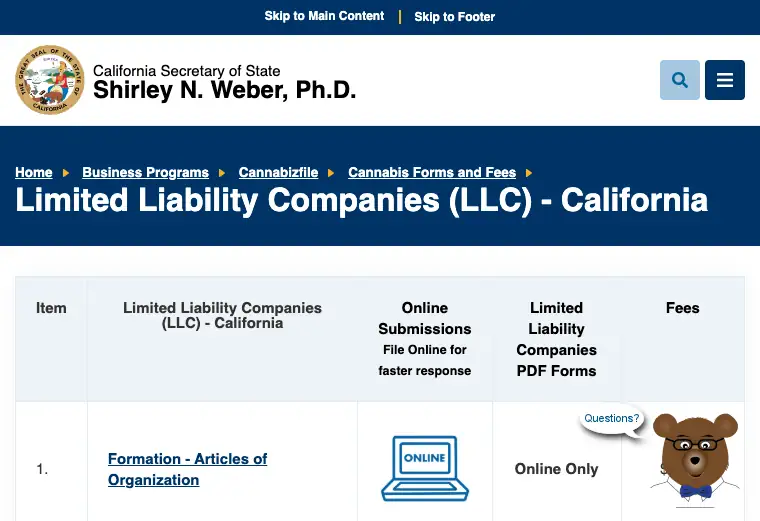
1. Articles of Organization, Form LLC-1 ($70 - Mandatory)
Filing the Articles of Organization with the California Secretary of State costs $70, whether you file online, by mail or in person [1]. Our full guide on starting an LLC in California walks through the paperwork itself.
If you need it faster, the state sells expedited processing as a separate service on top of that base fee. A 24-hour filing adds $350. A same-day filing adds $750, as long as the state receives your documents by 9:30 a.m.
A 4-hour option costs more than either of those. It needs a $500 preclearance step first, then another $500 for the 4-hour filing itself. That's $1,000 total on top of the $70 base fee.
See how long it takes to form an LLC in California for the standard timeline if you skip every expedite tier.
2. Name Reservation ($10 - Optional)
Reserving a business name before you file costs $10 and holds that name for 60 days. Most founders skip this step and just file the Articles of Organization once they've confirmed the name is open.
Ongoing Costs to Maintain Active Status in California
Here is a detailed California LLC cost breakdown for what comes after formation, from state filings to franchise tax. Each item below lists its current fee and how often it comes due.
1. Business Licenses (Varies - If Applicable)
California doesn't issue one statewide general business license. Cities and counties set their own local business tax certificates instead. Some industries also need a separate state-level permit on top of that. Check with your local city or county government to confirm what applies to your business.
2. Statement of Information, Form LLC-12 ($20 - Mandatory)
Every California LLC must file a Statement of Information within 90 days of the Secretary of State approving the Articles of Organization. After that, it files again every two years, during a filing window tied to the LLC's anniversary month [2]. The fee is $20.
Miss the deadline and the state sends a delinquency notice, then waits 60 more days before certifying the LLC as noncompliant. Once that happens, a $250 penalty is assessed automatically [3].
3. Franchise Tax ($800 - Mandatory)
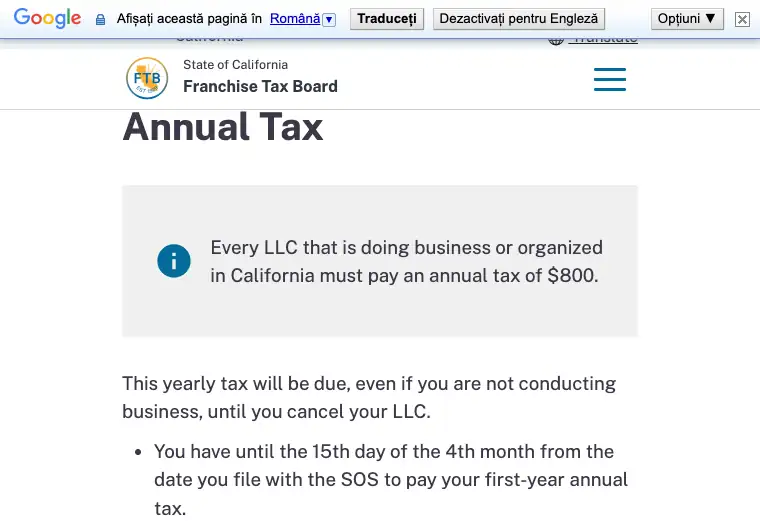
Every California LLC owes the Franchise Tax Board an $800 minimum franchise tax [4]. The first payment is due by the 15th day of the 4th month after the LLC forms. Every year after that, it's due by the 15th day of the 4th month of the LLC's tax year. For a calendar-year LLC, that date is April 15.
A temporary exemption waived this tax for LLCs formed between 2021 and 2023. That exemption has expired, so any LLC formed from 2024 onward owes the full $800 in its first year.
Payment goes through Form 3522. The exact due date for your LLC is covered on our page about the California LLC $800 franchise tax due date.
4. LLC Fee for Higher-Income LLCs ($900 - $11,790 - Conditional)
LLCs with total California income above $250,000 owe an additional fee on top of the $800 franchise tax. Total income here means gross income plus cost of goods sold, not net profit.
The fee runs $900 at $250,000 and climbs to $11,790 for income of $5,000,000 or more. It's an added cost on top of the $800 minimum tax, paid in addition to it.
The fee is estimated and paid using Form 3536 by the 15th day of the 6th month of the tax year. Underpaying it adds a 10% penalty on the shortfall.
Our guide on how to file LLC taxes in California walks through the full income-fee schedule and the underpayment rules in more detail.
5. Registered Agent Service ($0 Self-Service or $80-$300 Paid - Mandatory)
Every LLC in California must name an agent for service of process. The agent needs a California address and must be on hand during business hours to accept legal documents.
You can act as your own agent for $0, or hire one of the best registered agent services in California for $80 to $300 a year.
Optional Costs Worth Knowing About
1. Operating Agreement ($0 - Attorney Cost Varies)
California law lets an LLC's operating agreement be written, oral or implied by how the members act [5]. It governs most of how the company runs day to day.
A written agreement is only needed for a narrow set of decisions, like restricting which members can act as the LLC's agents.
Most founders still put it in writing anyway. A free template covers the basics, or an attorney can draft a California LLC operating agreement for a cost that depends on the ownership structure.
2. DBA / Fictitious Business Name (Varies by County - Optional)
If your LLC operates under a name other than its legal one, you must register a Fictitious Business Name in California. File it with the county clerk instead of the Secretary of State [6].
Los Angeles County charges $26 for a first-time filing, and the fee varies from county to county across the state.
You'll also need to publish the statement in a local newspaper within 45 days of filing, then file proof of that publication with the county. The registration expires after 5 years and needs to be renewed.
3. Certificate of Status ($5 - Optional, but Recommended)
A Certificate of Status confirms your LLC is in good standing with the state. It costs $5 and takes just minutes through the Secretary of State's online portal. That makes it worth ordering before a bank or investor asks for proof.
4. EIN ($0 - Optional, but Recommended)
Getting an EIN is free directly through the IRS website, and it usually takes just a few minutes online. You will need it to open a business bank account and hire employees.
For a full look at LLC costs in every state, see our national guide, which breaks down how California compares.
FAQs
How Much Does It Cost to Register a Foreign LLC in California?
It costs $70 to register a foreign LLC in California, the same fee as a domestic Articles of Organization filing. You file an Application to Register (Form LLC-5) with the Secretary of State instead.
How Much Does It Cost to Dissolve an LLC in California?
It costs $0 to dissolve an LLC in California. The Secretary of State charges no filing fee for a certificate of dissolution or cancellation of the Articles of Organization.
References:
- https://leginfo.legislature.ca.gov/faces/codes_displaySection.xhtml?sectionNum=12190.&lawCode=GOV
- https://leginfo.legislature.ca.gov/faces/codes_displaySection.xhtml?sectionNum=17702.09.&lawCode=CORP
- https://leginfo.legislature.ca.gov/faces/codes_displaySection.xhtml?sectionNum=19141.&lawCode=RTC
- https://www.ftb.ca.gov/file/business/types/limited-liability-company/index.html
- https://leginfo.legislature.ca.gov/faces/codes_displaySection.xhtml?sectionNum=17701.10.&lawCode=CORP
- https://leginfo.legislature.ca.gov/faces/codes_displaySection.xhtml?sectionNum=17917.&lawCode=BPC