How to File LLC Taxes in Georgia (2026)

A single-member Georgia LLC reports its income on Form 500 with the Georgia Department of Revenue. A multi-member LLC files Form 700, an S-corp election files Form 600S and a C-corp election files Form 600.
Every one of those forms pairs with a federal return, and the state now taxes income at a flat 4.99% rate.
This page walks through which form fits your LLC, the current Georgia tax rate, the federal taxes that still apply and the extra state taxes that can catch owners off guard. The hub page covers the federal filing basics behind each classification.
Quick Summary
- Confirm your LLC's tax classification before you file. It determines which form and rate apply to your return.
- Check the current rate on the Georgia Department of Revenue site first. Two rate cuts already landed in recent years, and another could follow.
- Run the numbers with a CPA before electing PTET or S-corp treatment. A poor fit for your ownership structure can cost more than it saves.
Georgia LLC Tax Summary
Georgia LLC taxes vary by classification. The table below lists the federal and state forms, the filing agency and the deadline and rate for each type.
| LLC Type | Federal Form | State Form | Filed With | Filing Deadline & Tax Rate |
|---|---|---|---|---|
| Single-member LLC | Form 1040, Schedule C | Form 500 | Georgia Department of Revenue | Follows federal Form 1040 4.99% flat rate (owner's personal return) |
| Multi-member LLC | Form 1065 | Form 700 | Georgia Department of Revenue | March 15 4.99% flat rate (per member's share) |
| S-Corp election | Form 1120-S | Form 600S | Georgia Department of Revenue | March 15 4.99% flat rate (per shareholder's share, or entity-level if PTET elected) |
| C-Corp election | Form 1120 | Form 600 | Georgia Department of Revenue | April 15 (calendar year) 4.99% flat corporate rate |
How Georgia LLCs are taxed
Georgia taxes LLCs as pass-through entities by default. The LLC itself owes no state income tax. Profits and losses pass to the members, who report them on their own returns.
Members can swap that default by electing S-corp or C-corp treatment with the IRS, and Georgia follows whatever classification you choose.
That choice starts as soon as you start an LLC in Georgia, and the hub page on how LLC tax filing works covers the federal rules behind each election.
1. Single-member LLC (Form 500)
A single-member LLC is a disregarded entity by default. The owner reports LLC income on their personal Georgia Form 500 return, the same return anyone with Georgia income files, and there's no separate state LLC filing.
Form 500 follows your federal Form 1040 due date, and the owner pays tax on that income at Georgia's flat rate.
2. Multi-member LLC (Form 700)
A multi-member LLC files Georgia Form 700, the state partnership return, alongside the federal Form 1065. Each member gets a Schedule K-1 showing their share of profit or loss, and each member reports that share on their own Georgia Form 500.
The LLC itself still owes no state income tax on that income. Form 700 is due by March 15 for a calendar-year partnership, the 15th day of the third month after the tax year closes.
3. S-Corp election (Form 600S)
An LLC that elects S-corp status with the IRS files Georgia Form 600S, due March 15 for a calendar-year filer.
The election lets owner-employees split pay into salary and distributions. The salary portion runs through payroll and owes the standard payroll taxes, split between the business and the employee.
Distributions bypass both payroll tax and the 15.3% federal self-employment tax a sole owner would pay on that income. Shareholders pay Georgia's flat rate on their personal returns either way.
S-corp owners can also elect Georgia's pass-through entity tax on this same return, which shifts the state tax bill to the entity level. That election is covered in the PTET section below.
4. C-Corp election (Form 600)
An LLC that elects C-corp status files Georgia Form 600 alongside federal Form 1120. The corporation pays Georgia's flat corporate rate on its own profits, and shareholders pay tax again on any dividends they receive.
Form 600 is due the 15th day of the fourth month after the tax year closes, April 15 for a calendar-year filer.
5. Georgia income tax rate for tax year 2026
Georgia's flat individual and corporate income tax rate is 4.99% for tax years beginning on or after January 1, 2026 [1].
The corporate rate matches the individual rate by law, so an LLC taxed as a C-corp pays that same 4.99% [2].
Recheck this figure directly with the Georgia Department of Revenue before you file. The legislature has cut this rate twice in recent years, and another reduction could land before your return is due.
Georgia also repealed its corporate net worth tax for tax years beginning on or after January 1, 2024. LLCs taxed as corporations no longer owe that on top of income tax. That change is one of several covered on our page about what an LLC costs in Georgia.
Federal taxes Georgia LLC owners pay
LLC members who report business income personally also owe federal self-employment tax. That tax runs 15.3% total, split into 12.4% for Social Security and 2.9% for Medicare [3].
This tax applies only to net earnings from self-employment. Salary that already runs through payroll, like an S-corp owner's wages, isn't taxed again this way.
Federal income tax
Most LLC owners pay both federal and state tax in quarterly installments instead of one lump sum. The IRS due dates are April 15, June 15, September 15 and January 15.
Individual members use Georgia Form 500-ES for their state estimated payments, while LLCs taxed as corporations or partnerships use Form 602ES instead.
Other Georgia taxes that may apply
A few more Georgia taxes only kick in once your LLC hires workers, sells goods or services or operates in a regulated industry.
1. Georgia state employer taxes
An LLC with employees registers for unemployment insurance with the Georgia Department of Labor. That's required once it hits a $1,500 quarterly payroll or has a worker on staff in 20 different weeks of the year.
New employers pay a 2.70% tax rate on the first $9,500 of each worker's wages until they build an experience rating [4].
2. Sales and use tax
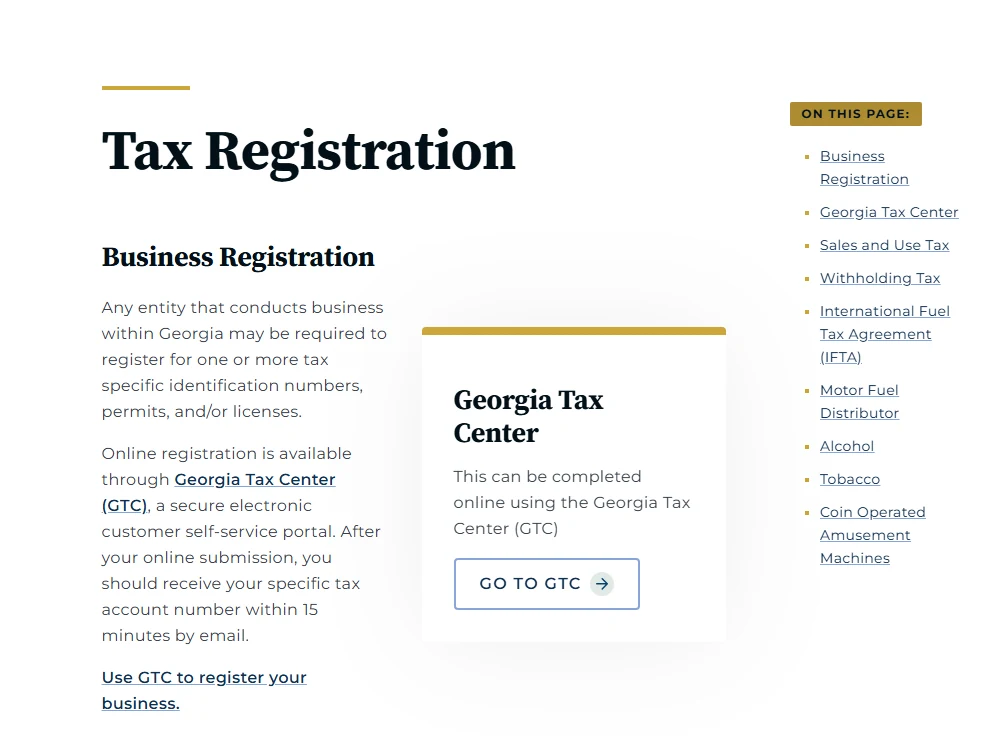
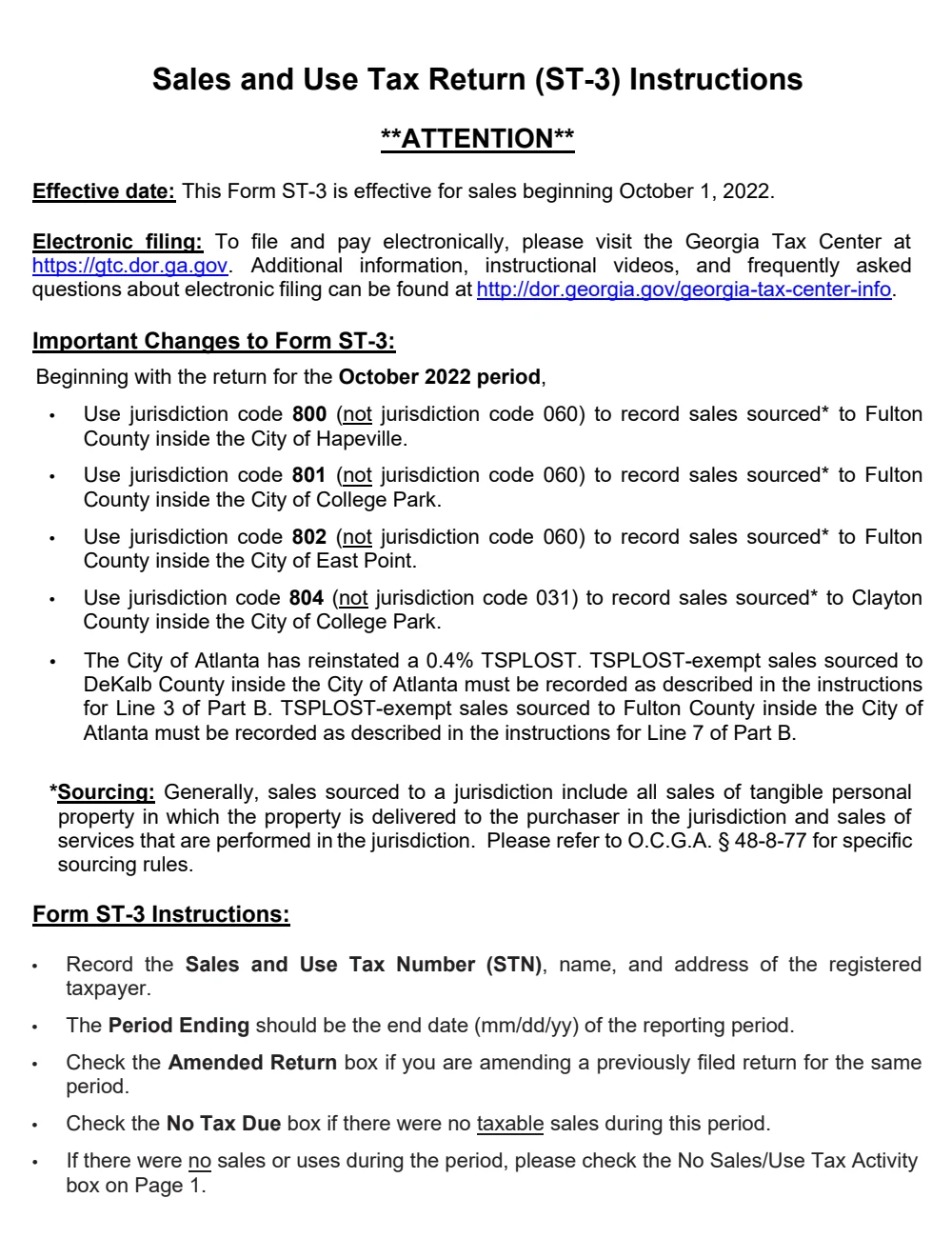
Georgia's base sales tax rate is 4% statewide. Counties add local option and special-purpose taxes on top of that, pushing the combined rate to roughly 6% to 9% depending on where you sell. Register with the Georgia Tax Center before you start collecting from customers.
3. Industry and local taxes
Some Georgia LLCs owe extra taxes tied to their specific business:
- Transportation services tax: ride-share and delivery businesses.
- Alcohol and tobacco license fees: businesses that sell either product.
- State hotel-motel fee: lodging businesses, per room per night.
- Motor fuel tax: businesses that sell or distribute fuel.
What is deductible for a Georgia LLC
Georgia offers several business tax credits, but the amounts and eligibility rules change often enough that a state-published list is your safest source.
The Georgia Department of Revenue publishes the current credit menu, and a CPA familiar with that list can tell you which ones your LLC actually qualifies for.
The federal qualified business income deduction is separate from any Georgia credit. It's a federal deduction, and you claim it on your personal federal return.
Georgia pass-through entity tax (PTET) election
Georgia lets eligible partnerships and S-corps pay state income tax at the entity level instead of passing it to the owners.
The election matters because federal law caps the state and local tax deduction at $10,000 per individual return, and entity-level tax isn't subject to that cap [5].
Only partnerships and S-corps can elect, and the entity must be entirely owned by people or trusts eligible to hold S-corp stock. Single-member LLCs taxed as disregarded entities can't make this election at all.
You elect by checking the box on Form 600S or Form 700, filed by your return's due date or extended due date. The choice becomes irrevocable once that date passes.
A CPA can model whether the entity-level election actually saves your specific ownership group money before you lock it in.
FAQs
Do Foreign LLCs Registered in Georgia Pay Georgia Taxes?
Yes, foreign LLCs registered in Georgia pay Georgia taxes the same way domestic LLCs do, including state income, sales and payroll tax once you do business here.
How Do I Know My LLC's Georgia Tax Classification?
You know your LLC's Georgia tax classification by checking your most recent federal return. It shows whether you're filing as a disregarded entity, partnership, S-corp or C-corp.
Can My Georgia LLC Change Its Tax Classification Later?
Yes, your Georgia LLC can change its tax classification by filing a new election with the IRS. The new classification applies starting the tax year the election takes effect.
References:
- https://gov.georgia.gov/press-releases/2026-05-11/gov-kemp-signs-legislation-lowering-taxes-and-supporting-economic-growth
- https://gov.georgia.gov/press-releases/2024-04-18/gov-kemp-signs-historic-tax-cut-package-law
- https://www.irs.gov/businesses/small-businesses-self-employed/self-employment-tax-social-security-and-medicare-taxes
- https://dol.georgia.gov/faqs-employers/employers-faqs-unemployment-insurance
- https://dor.georgia.gov/hb-149-pass-through-entity-tax-faq