How To Start a Business in Alaska (8-Step Process)

Alaska is a strange and wonderful place to start a business. Resource-rich industries, a fishing economy that's its own beast, a tourism sector that still has room to grow. The opportunities are real, but the playbook is different from the Lower 48.
I've been guiding business owners through Alaska formation for 20+ years. The pattern is consistent. Founders who treat Alaska as just another state run into the same surprises. Founders who learn the quirks early build serious businesses.
This guide walks through everything you need. Picking a structure, registering, taxes, licenses and what to watch for in year one.
Set on an LLC specifically? Read our deeper guide on starting an LLC in Alaska.
Quick Summary
- Pick the right entity type and register it with the Alaska Division of Corporations.
- Every Alaska LLC needs a $50 state business license. Articles of Organization start at $250.
- Alaska has 73,000+ small businesses, which make up more than 99% of all businesses in the state.
Step-by-Step Alaska Business Formation Process

Step 1: Choose Your Business Structure
Your legal structure decision shapes everything that follows. Taxes, personal liability, paperwork burden, how you raise money. Get it right early.
Each Alaska business structure carries different requirements and trade-offs.
| Business Structure | Personal Liability | Tax Treatment | Best For |
|---|---|---|---|
| LLC | Limited | Pass-through | Most small businesses |
| Corporation | Limited | Double taxation (C-Corp) | Large businesses seeking investment |
| Partnership | Unlimited (General) | Pass-through | Two or more partners |
| LLP | Limited | Pass-through | Professional services |
| Non-Profit | Limited | Tax-exempt | Charitable organizations |
| Sole Proprietorship | Unlimited | Personal tax return | Single-owner simple businesses |
Step 2: Name Your Business
Alaska has specific naming rules that vary by entity type. Knowing them upfront saves you from rejected filings and re-paid fees.
Get this right the first time and the rest of the formation moves quickly.
- LLCs must include "Limited Liability Company," "LLC," or "L.L.C." in the name.
- Corporations need one of "Corporation," "Incorporated," "Company," "Corp," "Inc" or "Co." in the name. Same availability checks apply as for LLCs.
- Limited partnerships use "Limited Partnership" or "LP". LLPs use "Limited Liability Partnership" or "LLP".
- Non-profits must signal their non-profit status and can't use language that implies profit-making activities.
- Sole proprietorships operating under the owner's legal name need no special naming. Using a different name? Register a DBA for $25.
Before you settle on a name, search the Alaska business name database to confirm it's available. You can reserve a name for 120 days by paying a $25 reservation fee, giving you breathing room while you finish the formation paperwork.
State name registration only protects you within Alaska. If you plan to operate across state lines, federal trademark registration through the U.S. Patent and Trademark Office is worth the extra step for broader protection.
Step 3: Register Your Business
The registration paperwork and fees depend on your structure. Every filing goes through the Alaska Division of Corporations, Business and Professional Licensing.
- LLCs file Articles of Organization with the Alaska Division of Corporations. The fee is $250. Online filings process in 3-5 business days.
- Corporations file Articles of Incorporation. Same $250 fee, same processing window.
- Limited partnerships file a Certificate of Limited Partnership for $150. LLPs file a Statement of Qualification for the same $150.
- Non-profits file Articles of Incorporation specifically for non-profit entities. Filing fee is $50, a real discount versus other structures.
- Sole proprietorships don't need state registration unless you're operating under a trade name. In that case, the DBA registration runs $25.
Standard processing through the Alaska Division of Corporations runs 10-15 business days. Expedited processing is available for an extra fee if you need to move faster.
Every entity except a sole proprietorship needs a registered agent with a physical Alaska address. You can be your own agent if you live in-state, or you can hire a professional service. Going rate for Alaska registered agent services is $100-300 per year, depending on the provider.
Step 4: Write an Operating Agreement
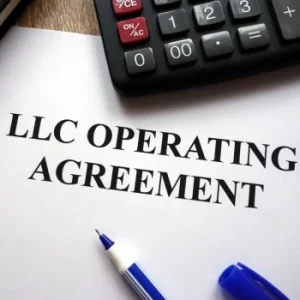
The operating agreement is your LLC's internal rulebook. Who owns what, who decides what, how profits flow and how big decisions get made.
Alaska doesn't require one. But skipping it means you fall back to the state's default rules, which are rarely what you actually want. Members fight, money gets murky, personal liability creeps in. Write one.
Step 5: Get Federal and Alaska State Tax IDs
Most Alaska small business owners need a federal EIN from the IRS. Depending on your structure, you may need state tax registrations on top of that.
Alaska has no state personal income tax and no statewide sales tax. But some cities run their own local sales taxes, so the no-sales-tax story is incomplete.
For example, Juneau (City & Borough of Juneau) charges a 5% general sales tax. Ketchikan runs seasonal rates. 8% from April through September and 5.5% from October through March, which combines the city and borough rates.
Corporations pay state corporate income tax somewhere between 1% and 9.4%.
If you'll have employees, you also register for unemployment insurance tax. You may need workers' compensation coverage and medical expenses coverage too.
Step 6: Open a Business Bank Account
To open a business bank account, bring your formation papers, EIN, business license and ID. Most banks need all four.
A separate business account isn't optional. It keeps personal and business spending separate, which protects your liability shield, makes bookkeeping cleaner at tax time and makes any future audit far less painful.
Why Start a Business in Alaska?
Alaska's economic profile is unusual. A few specific advantages compound in your favor if you can stomach the operating quirks.
- Economic advantages. No state income tax, no statewide sales tax and the annual Alaska Permanent Fund Dividend that keeps local spending flowing. Resource industries (oil, gas, fishing, mining, tourism) drive most of the economic engine.
- Market opportunities. Strategic location for Asia-Pacific trade, a tourism sector that keeps growing and steady demand for genuinely Alaskan products in both local and export markets.
- Infrastructure. Well-developed transport hubs like the Port of Anchorage and Anchorage International Airport, telecom systems that are improving year over year and a skilled workforce with deep industry-specific expertise.
Employment and Labor Laws

Key Alaska employment laws to know:
- Verify every new hire with an I-9. Use E-Verify if your contracts or industry require it.
- Pay at least Alaska's minimum wage, which is higher than the federal floor and adjusts annually for cost of living.
- Follow federal OSHA rules plus Alaska's own AKOSH program for workplace safety.
- Comply with anti-discrimination laws covering all protected categories.
- Meet enhanced safety standards if you operate in high-risk industries like fishing or oil work.
Financing Your Alaska Business
Alaska business funding options worth knowing:
- Alaska Industrial Development and Export Authority (AIDEA) offers financing for projects that drive economic growth.
- Alaska Division of Economic Development provides grants and business loans for qualifying businesses.
- SBA loans are available through local lenders with solid terms. Free help comes from Small Business Development Centers.
- Local cities and boroughs may offer tax breaks, grants or other perks to attract businesses to the area.
- Angel investors and venture capital are growing in Alaska, especially in tech, natural resources and tourism.
Common Mistakes to Avoid
Common mistakes I see new Alaska business owners make:
- Missing state professional licensing requirements
- Skipping city or borough permits because they assumed state registration covered everything
- Thinking no state income tax means no tax obligations at all
- Forgetting to collect local sales tax where city or borough rules require it
- Treating federal tax obligations as optional or back-burner
Ongoing Compliance Requirements
- Annual reports and filings depend on entity type. Most Alaska entities file biennial reports with the Alaska Division of Corporations.
- Tax deadlines mostly follow the federal schedule. A few Alaska-specific taxes have their own deadlines worth tracking separately.
- License renewals are annual. Most Alaska business licenses expire on December 31st, so put it on the calendar early.
Case Studies/Success Stories

Two Alaska businesses that started small and turned into something serious:
1. Moose's Tooth Pub & Pizzeria
Rock climbers Rod Hancock and Matt Jones opened Moose's Tooth in Anchorage in 1996. The location had killed other businesses, but they made it work. The pizzeria grew into the highest-grossing independent pizzeria in the entire United States, pulling in up to $6 million a year.
The founders later expanded into Bear Tooth Theatrepub and Broken Tooth Brewing. Today they employ more than 500 people across the three ventures, turning what was once a risky storefront into a thriving Anchorage hub.
2. Kaladi Brothers Coffee
Kaladi Brothers started in 1984 as a single espresso cart in Anchorage. By 2025 they'd expanded to 14 locations across Alaska and Washington. The roastery has earned national recognition and is a big part of why Anchorage's modern café culture exists at all.
FAQs
1. How Long Does it Take To Start a Business in Alaska?
Roughly 1-2 weeks for a typical Alaska business start. Online LLC and corporation filings process in 3-5 business days. The rest of the time gets eaten by business license issuance and bank account setup, both of which run on their own clocks.
2. What Are the Total Costs Involved?
Costs vary by structure, but the typical Alaska LLC startup runs about $300 in 2024. That covers the $250 Articles of Organization filing fee and the $50 state business license. Optional add-ons (registered agent service, name reservation, expedited processing) stack on top of that.
3. Do I Need a Lawyer to Start a Business?
No, the filings themselves don't require legal counsel. That said, talking to an Alaska business attorney is worth the cost for complex structures, multi-member LLCs or anything in a regulated industry. The $500 you spend on an hour of legal advice often prevents a far more expensive mess later.
4. How Do I Find Customers in Alaska?
Alaska is a relationship economy in person and an online economy across distance. Build local connections in your home borough, then layer on a credible digital presence so customers in the dispersed communities outside your local area can actually find and trust you.
5. What Are the Biggest Challenges for New Businesses?
Three big ones. Seasonal revenue swings that make cash flow planning a year-round exercise, a thin labor pool that makes hiring qualified employees genuinely hard, and the elevated operating costs that come with running anything in a remote state. None are dealbreakers. All require planning.
Alaska is a real opportunity for the right founder. No state income tax, no statewide sales tax and access to markets that no other state can offer the same way. The keys to success here are pretty consistent. Understand local conditions, plan for the seasons, follow the rules and lean on local resources to build the community connections that drive long-term Alaska businesses.